| iterator end() noexcept; |
(1) | (since C++11) |
| const_iterator end() const noexcept; |
(2) | (since C++11) |
| const_iterator cend() const noexcept; |
(3) | (since C++11) |
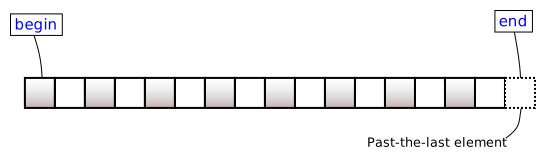
Returns an iterator to the element following the last element of the unordered_multiset.
This element acts as a placeholder; attempting to access it results in undefined behavior.
Parameters
(none)
Return value
Iterator to the element following the last element.
Complexity
Constant.
Notes
Because both iterator and const_iterator are constant iterators (and may in fact be the same type), it is not possible to mutate the elements of the container through an iterator returned by any of these member functions.
Example
#include <iostream>
#include <iterator>
#include <string>
#include <unordered_set>

int main()
{
    const std::unordered_multiset<std::string> words =
    {
        "some", "words", "to", "count",
        "count", "these", "words"
    };

    for (auto it = words.begin(); it != words.end(); )
    {
        auto count = words.count(*it);
        std::cout << *it << ":\t" << count << '\n';
        std::advance(it, count); // all count elements have equivalent keys
    }
}some: 1
words: 2
to: 1
count: 2
these: 1See also
| returns an iterator to the beginning (public member function) | |
| (C++11)(C++14) |
returns an iterator to the end of a container or array (function template) |
Content from this page on cppreference.com, licensed under CC-BY-SA 3.0 and GFDL. Modified: restyled, site navigation removed, code windows added. Offline snapshot of 9 February 2025.